
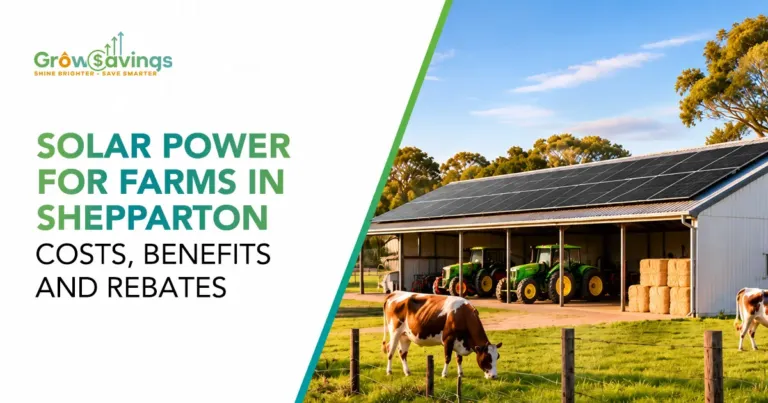
Solar power for farms in Shepparton can reduce electricity costs, support agricultural operations and improve long-term energy efficiency. A commercial farm solar system typically costs between $8,000 and $100,000 for capacities ranging from 10kW to 100kW. Eligible farmers can also access federal solar incentives to reduce upfront installation costs.
Shepparton and the Goulburn Valley are among Victoria’s important agricultural regions. However, running irrigation pumps, milking equipment, refrigeration systems and machinery can result in substantial electricity expenses.
Installing solar panels can help farmers manage these expenses while building more sustainable agricultural businesses.
Why Is Solar Power for Farms in Shepparton a Smart Investment?
Shepparton’s favourable sunlight conditions make solar energy an attractive option for agricultural properties.
Many farming activities require electricity during daylight hours. As a result, farmers can use solar electricity directly instead of purchasing power from the grid.
Agricultural properties also often have large shed roofs or available land suitable for solar installations.
Furthermore, farms operating irrigation and cooling equipment during summer can benefit from increased seasonal solar generation.
With suitable system design, farmers can reduce operating expenses and improve long-term financial stability.
How Does Solar Power Work on Farms?
Farm solar systems convert sunlight into electricity through photovoltaic panels. An inverter then converts the generated electricity into usable power for agricultural equipment.
Solar energy can support various farming operations, including:
- Irrigation systems and water pumps
- Dairy milking and processing equipment
- Milk cooling and refrigeration systems
- Fruit storage and packing facilities
- Farm workshops, machinery and lighting
- Electric fencing and livestock watering systems
Farmers can consume generated electricity directly, store surplus energy in batteries or export eligible excess electricity to the grid.
However, the best configuration depends on each farm’s electricity consumption patterns and operational requirements.
How Much Does Solar Power for Farms Cost in Shepparton?
The cost of agricultural solar installation in Shepparton depends on system capacity, equipment selection, electrical infrastructure and installation complexity.
A smaller farm may require a 10kW or 20kW solar system. Meanwhile, larger dairy farms and irrigation-dependent properties may require systems exceeding 100kW.
Estimated Farm Solar Installation Costs
| Solar system size | Estimated installation cost | Potential applications |
| 10kW | $8,000–$12,000 | Small farms and workshops |
| 20kW | $15,000–$23,000 | Small agricultural operations |
| 30kW | $23,000–$35,000 | Dairy equipment and irrigation |
| 50kW | $40,000–$60,000 | Dairy farms and orchards |
| 100kW | $70,000–$100,000 | Large agricultural operations |
| Above 100kW | Custom quotation | Large farms and agricultural facilities |
These indicative prices reflect 2026 commercial solar market estimates, including GST and applicable federal solar panel incentives.
Battery storage, major electrical upgrades, ground-mounted structures and additional network connection requirements may increase installation costs.
Farmers should obtain a customised quotation based on their property’s electricity usage and site conditions.
Also Read: How Much Do Solar Panels Cost in Shepparton?
What Are the Benefits of Solar Power for Farms?
Solar energy offers several financial and operational benefits for agricultural businesses across Shepparton and regional Victoria.
Lower Electricity Bills
Generating electricity on-site reduces dependence on purchased grid electricity.
Farms with substantial daytime electricity consumption may achieve greater savings through direct solar energy use.
Reduced Exposure to Electricity Price Increases
Solar panels allow farmers to generate a portion of their own electricity.
Consequently, farms become less exposed to increases in grid electricity prices.
Improved Energy Reliability
Combining solar panels with appropriately designed battery storage can support selected equipment during power outages.
This can be particularly valuable for refrigeration, livestock watering, and other essential farming operations.
Lower Environmental Impact
Using renewable energy reduces reliance on grid electricity and can lower operational carbon emissions.
It also supports more sustainable agricultural practices.
Long-Term Financial Benefits
Quality solar panels can generate electricity for 25 years or longer, although performance gradually declines.
After recovering installation costs, farmers can continue benefiting from reduced electricity expenses.
What Size Solar System Does Your Farm Need?
The right solar system size depends on electricity consumption, operating hours, seasonal demand and available installation space.
Different agricultural operations have different energy requirements.
| Farm type | Indicative solar system size |
| Small livestock farms | 10kW–30kW |
| Small dairy farms | 20kW–50kW |
| Large dairy farms | 50kW–100kW+ |
| Fruit orchards | 30kW–100kW+ |
| Irrigation-intensive farms | 30kW–200kW+ |
| Cold storage and packing facilities | 50kW–500kW+ |
These ranges are general planning examples rather than system sizing recommendations.
For example, dairy farms often require electricity during early morning and evening milking periods. Therefore, battery storage or carefully planned solar panel orientation may improve energy utilisation.
An assessment of at least 12 months of electricity consumption can help determine an appropriate system capacity.
What Solar Rebates Are Available for Farmers in Victoria?
Farmers in Shepparton may qualify for federal renewable energy incentives that reduce solar installation costs.
Small-scale Renewable Energy Scheme (SRES)
The Australian Government’s Small-scale Renewable Energy Scheme provides financial incentives through Small-scale Technology Certificates (STCs).
Eligible solar installations up to 100kW can receive an upfront financial benefit.
The incentive amount depends on system capacity, installation location, certificate value and installation year.
Expanded Commercial Solar Incentives Up to 1MW
From 1 October 2026, the Australian Government expanded SRES eligibility to qualifying mid-scale solar systems exceeding 100kW and up to 1MW.
This change creates additional opportunities for larger agricultural businesses, commercial facilities and energy-intensive farms.
Eligible mid-scale systems benefit from a fixed five-year STC deeming period.
Farmers considering larger solar installations can now explore upfront STC incentives or applicable large-scale renewable energy certificate arrangements.
However, additional technical, installation and compliance requirements apply to mid-scale solar systems.
Cheaper Home Batteries Program
Despite its name, the federal Cheaper Home Batteries Program can also support eligible small businesses.
Qualifying agricultural businesses may receive financial assistance when installing eligible battery storage alongside solar power.
Eligibility depends on battery capacity, equipment, installation requirements and current program conditions.
Victorian Government Agricultural Grants
Victorian Government agricultural and energy efficiency grants may become available during specific funding rounds.
Farmers should check current program availability before including additional grants in their investment calculations.
Residential Solar Victoria rebates should not be assumed to apply to commercial agricultural installations.
How Much Can Farmers Save by Installing Solar Panels?
Solar savings depend primarily on electricity consumption, solar generation, energy tariffs and the proportion of electricity used onsite.
Consider a Shepparton farm installing a 50kW solar system.
Example: 50kW Agricultural Solar System
| Financial calculation | Estimated amount |
| Solar installation investment | $50,000 |
| Annual solar electricity generation | 70,000kWh |
| Direct solar consumption | 80% |
| Solar electricity used onsite | 56,000kWh |
| Assumed grid electricity rate | $0.28/kWh |
| Annual electricity cost savings | $15,680 |
| Surplus electricity exported | 14,000kWh |
| Assumed feed-in tariff | $0.03/kWh |
| Annual export income | $420 |
| Total annual financial benefit | $16,100 |
| Estimated simple payback period | 3.1 years |
This example assumes the farm can export surplus electricity under its network connection agreement.
Actual savings depend on seasonal energy consumption, system performance and electricity tariffs. The calculation excludes maintenance, financing, taxation and equipment replacement costs.
Are Solar Batteries Worth It for Farms?
Solar batteries can be worthwhile for farms that consume significant electricity outside daylight hours or require backup power.
Dairy farms, cold storage facilities and agricultural businesses operating overnight may particularly benefit from energy storage.
Batteries store surplus solar electricity during the day for later consumption. Consequently, farmers can reduce their reliance on grid electricity during evening and overnight operations.
However, not every agricultural property needs battery storage.
Farms with high daytime electricity consumption may achieve attractive returns through solar panels alone.
Additionally, backup power requires compatible equipment and appropriate electrical system design. Standard grid-connected solar systems generally shut down during power outages.
Farmers should evaluate battery capacity, equipment starting loads, backup requirements and expected financial benefits before investing.
What Should Farmers Consider Before Installing Solar Panels?
A successful agricultural solar installation requires more than selecting the largest available system.
Farmers should assess roof strength, available land, shading, electrical infrastructure and equipment operating schedules.
Ground-mounted solar systems may be suitable when farm buildings lack sufficient roof space. However, these installations may involve additional construction and planning requirements.
Furthermore, regional electricity network capacity can affect system size and permitted grid exports.
Obtaining network approval and understanding installation requirements early can help prevent unexpected project expenses.
A professional solar assessment should also consider future expansion plans, additional machinery and potential battery installation.
Conclusion
Solar power for farms in Shepparton can be a valuable long-term investment for agricultural businesses looking to reduce electricity expenses.
With suitable system sizing, government incentives and efficient energy management, farmers can improve profitability and reduce dependence on grid electricity.
Whether you operate a dairy farm, orchard, livestock property or agricultural processing facility, choosing the right solar solution is essential.
Looking for agricultural solar installation in Shepparton or the Goulburn Valley?
Grow Savings Pty Ltd can help you explore solar panel and battery storage solutions based on your farm’s energy requirements, operational goals and budget.
Contact our team today to discuss your agricultural solar requirements and request a personalised quote.
Note: Installation costs, electricity generation, rebates, savings and payback periods are indicative. Actual results depend on site conditions, equipment, energy usage, network requirements and government program eligibility.
Frequently Asked Questions
Are solar panels worth it for farms in Shepparton?
Yes. Farms with suitable installation space and substantial daytime electricity consumption can benefit from lower operating costs and long-term energy savings.
Can solar panels run irrigation pumps?
Yes. Properly designed solar systems can power irrigation pumps, either through grid-connected arrangements or dedicated solar pumping systems.
Can farmers claim solar rebates in Victoria?
Eligible farmers can access federal solar incentives through the SRES. Qualifying systems exceeding 100kW and up to 1MW are also eligible under the expanded scheme.
How long does a farm solar system take to pay for itself?
Under favourable conditions, a simple payback period of around three to six years may be achievable. Actual returns depend on installation costs and electricity consumption.
Can solar panels run a dairy farm?
Yes. Solar panels can power milking equipment, refrigeration, water heating, and other dairy operations. Grid electricity or battery storage may supplement solar generation when required.